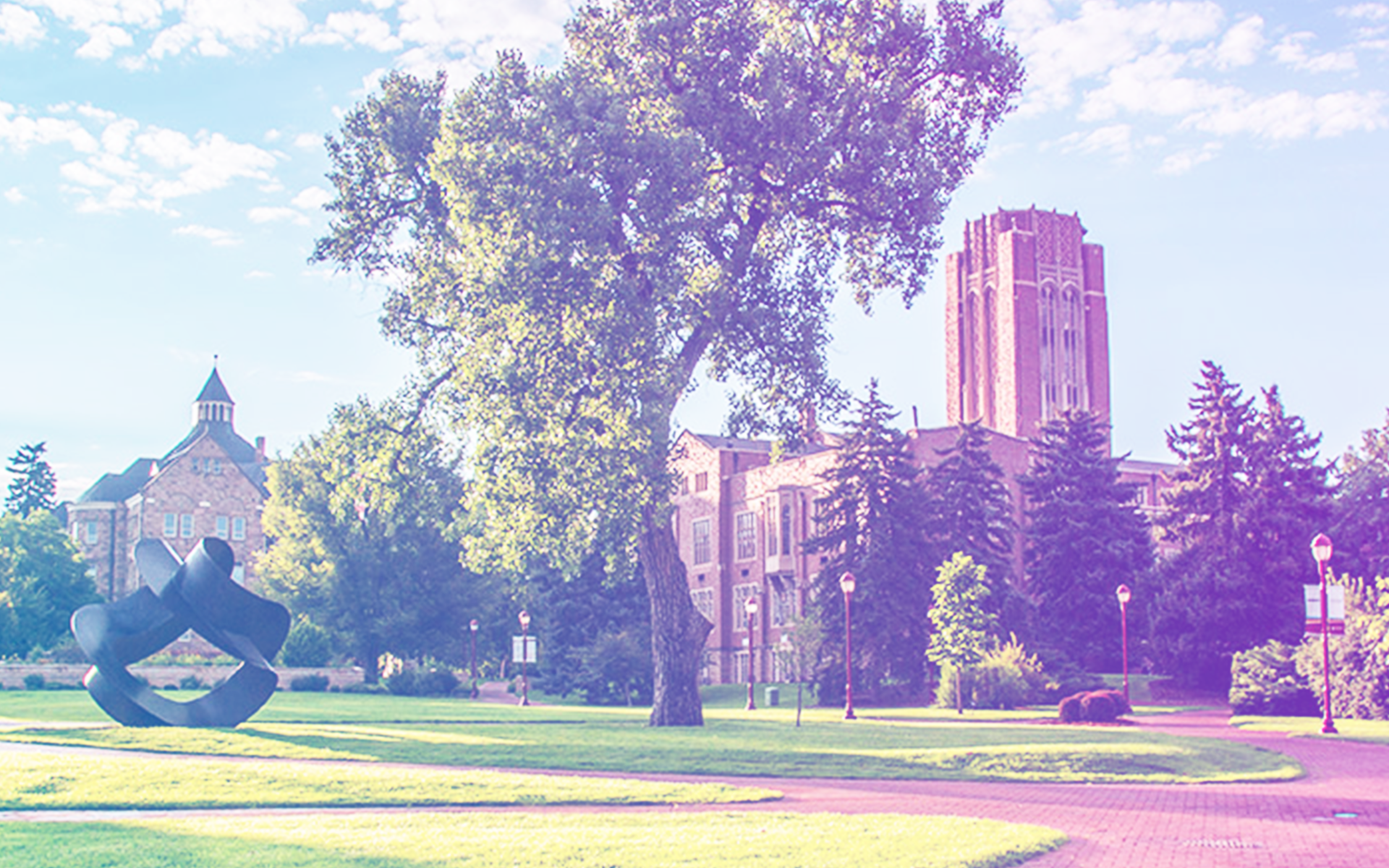


Montclair State University Campus Mobility
Driving a More Connected Campus

A data-driven approach to campus mobility led to increased ridership, improved operational efficiency, and a more connected student experience.
At Montclair State University, transportation is not just a service—it is the connective tissue that keeps campus life moving.
Serving approximately 28,000 students annually, the university operates one of the most active campus transportation systems in New Jersey. While the campus spans less than a square mile, its density, growth, and dual-campus structure—two locations separated by eight miles—create a uniquely complex operating environment.
For the transportation team, the mission is simple in concept but challenging in execution: move students efficiently, safely, and reliably throughout the day and into the night.
As Monica Smith, Director of Transportation, puts it:
“We are the heartbeat that moves the blood that gets everybody where they want to be.”
A Growing Campus, Rising Expectations
Montclair State’s continued enrollment growth has put increasing pressure on its transportation system. Students rely heavily on shuttle services to navigate campus, and expectations have evolved alongside broader digital experiences.
Riders want real-time information. They want transparency. They want to know where their bus is—and when it will arrive.
“TripShot is a great way where you can get information about your system and your buses and where they are with real, up-to-date data,” Smith said. “That’s what students were expecting.”
Before implementing TripShot, much of that visibility was limited. Operational data was often collected manually, requiring staff to track ridership through hand counts and paper logs. Reporting was time-consuming, and responding to service questions could require piecing together information from multiple sources.
“I was used to having hand counts… people would write down how many passengers got on sheets and then turn them in,” Smith said. “To see this in its updated digital form was wonderful.”
From Manual Processes to Real-Time Intelligence
Today, Montclair’s transportation team manages a fleet of 17 vehicles, including transit buses, cutaways, and a PWD vehicle, supported by a team of full-time and part-time drivers.
With TripShot, the operation has shifted from reactive to data-driven.
Instead of manually compiling reports, staff can now access detailed insights in minutes—from ridership and dwell time to vehicle usage and incident tracking.
“One of the things I love about TripShot is it gives me all that data at my fingertips,” Smith said. “I can easily pull a report… it’s really quite remarkable.”
This access to granular data has transformed how decisions are made. The team can identify inefficiencies, optimize routes, and adjust service levels based on actual demand patterns.
“I would say my favorite feature is simply the granular availability of data,” Smith said. “I can go over a month or even a year and say, ‘They’re spending too much dwell time at this location—let’s fix that.’”
Real-Time Visibility Improves the Rider Experience
For students, the most visible change has been access to real-time information.
TripShot allows riders to track buses directly from their phones, providing clarity and reassurance—especially during peak hours or late-night travel.
“It’s really reassuring to students if they can see a bus is coming, see it on their phone, and then see it actually happen,” Smith said.
This visibility is particularly important for services like Montclair’s Nighthawk program, which operates from 10 p.m. to 2 a.m. to support safe nighttime travel across campus.
“The reassurance that you press a button on your phone and a bus will come to you is immense,” Smith said. “You’re not out there alone.”
The ability to communicate service changes in real time has also improved transparency. Whether dealing with weather delays, traffic, or mechanical issues, the transportation team can provide timely, accurate updates to riders.
“Transparency begets honesty, begets trust,” Smith said.
Flexibility Across Fixed Route and On-Demand Service
Montclair’s transportation model combines fixed-route service with on-demand offerings, allowing the university to balance efficiency with flexibility.
Fixed routes operate throughout the day, supporting the majority of student movement across campus. During lower-demand periods, on-demand service provides a more cost-effective alternative.
“We found it’s much more cost-effective to do an on-demand service during slower times,” Smith said. “That’s where our best bang for our buck is.”
This hybrid approach has allowed Montclair to better align service with actual rider needs—delivering consistent service during peak hours while maintaining efficiency during off-peak times.
Significant Ridership Growth
As service visibility and flexibility improved, ridership followed.
From 2024 to 2025, Montclair State University saw a 63.06% increase in fixed-route ridership.
On-demand service experienced even more dramatic growth. Total ridership increased by 174.92%, rising from 1,770 rides in 2024 to 4,866 rides in 2025.
These gains reflect more than increased usage—they signal stronger rider confidence and a transportation system that better meets the needs of its community.
Faster Planning, Smarter Operations
TripShot has also significantly reduced the administrative burden on Montclair’s transportation team.
Tasks that once required extensive coordination—such as building schedules, adjusting service, or preparing reports—can now be completed quickly and efficiently.
“If you came to me and said, ‘I want to put in a new service,’ I can have one spun up in about 45 minutes,” Smith said. “That is insane when you think people have entire departments to put together schedules.”
The platform also simplifies service adjustments for holidays and academic breaks.
“I can say, ‘We have a holiday—we will not run,’ and it shuts everything down,” Smith explained. “Or I can program reduced service and push it out to everyone instantly.”
These efficiencies extend beyond time savings. By reducing reliance on manual processes, the team has been able to focus more on improving service and less on administrative overhead.
“It has freed up so much of my time,” Smith said.
Data That Drives Funding and Strategic Decisions
Beyond daily operations, TripShot has become a critical tool for long-term planning and funding.
Detailed operational data allows Montclair to support grant applications, including those related to electric vehicle initiatives and sustainability programs. The ability to quickly produce accurate, verifiable data has strengthened the university’s position when applying for funding.
“When somebody challenges you on that, you’re like, ‘Here’s the data. Here are the spreadsheets,’” Smith said. “It’s quite irrefutable.”
This level of transparency and accountability is increasingly important in an environment where transportation investments must be justified with measurable outcomes.
Building Accountability Across the Operation
TripShot has also improved accountability across drivers, supervisors, and administrators.
Drivers now rely on tablet-based workflows that guide them through routes and assignments, reducing confusion and ensuring consistency. Supervisors can monitor performance, track incidents, and conduct deeper operational analysis.
“Big brother is watching,” Smith said with a laugh. “I can see when people are pulling off route… I can see when things aren’t going the way they should.”
At the same time, the system provides reassurance—not just oversight. Drivers have clearer direction, and administrators have better insight into what is happening across the system.
“The drivers are the face of our operation,” Smith said. “Having that visibility makes everything easier and more accountable.”
A More Connected Campus
As Montclair State University looks ahead, transportation will continue to play a central role in shaping the student experience.
With plans to expand capabilities such as automatic passenger counting and further integrate transportation into daily campus life, the university is building on a strong operational foundation.
For a campus with two locations miles apart, that foundation is critical.
“TripShot has been the umbilical cord that ties both of these campuses together,” Smith said.
Ultimately, the transformation goes beyond technology.
It is about delivering a better experience—for students navigating campus, for drivers operating service, and for administrators making decisions that shape the future of mobility.
“I can do it nimbly, I can do it quickly, and I can do it cost-effectively,” Smith said. “I’m not a programmer. I’m a transit person. I can do it.”
Related Posts